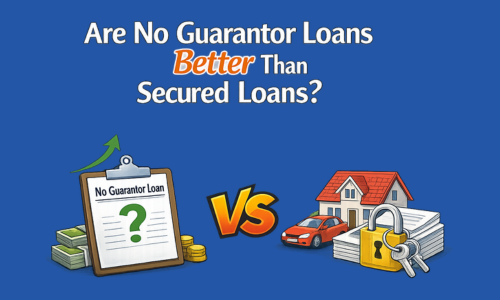
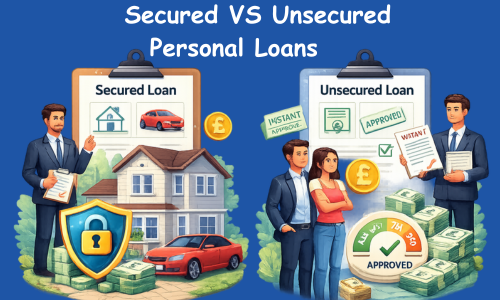
The difference between secured and unsecured personal loans is that a secured personal loan requires collateral, while an unsecured personal loan does not. Here, the approval depends on your creditworthiness and financial status.
Please note that the article is for informational purposes only. For a detailed overview of the same, you can contact an expert.
Both types of personal loans, secured or unsecured, help you borrow cash and repay in equal monthly instalments. Adding collateral to secured personal loans reduces the risk for the loan provider.
However, it may prove risky for you as you may lose your assets to creditors if you cannot pay the loan. The blog details the clear difference between secured and unsecured personal loans in the UK.
Define secured and unsecured loans
Secured personal loans are loans where you use a personal asset as security. It could be home, car, and other belongings. The most common type of secured personal loan is a mortgage, where individuals use their home as security to get cash.
You generally get a higher sum on secured loans than on unsecured loans due to the involvement of collateral. Although they come with the risk of losing assets, interest rates are low on these loans.
Unsecured personal loans do not require one to pledge collateral. Instead, the approval mainly depends on income, credit score, bill management, employment history, etc. Individuals with a good credit score and regular income may get instant approval.
The interest rates on unsecured personal loans in the UK remain higher than those on secured loans due to the lack of collateral involved. However, one does not lose assets even if they default on the loan. The credit score may drop temporarily as a result of loan default.
How does interest work on secured and unsecured personal loans?
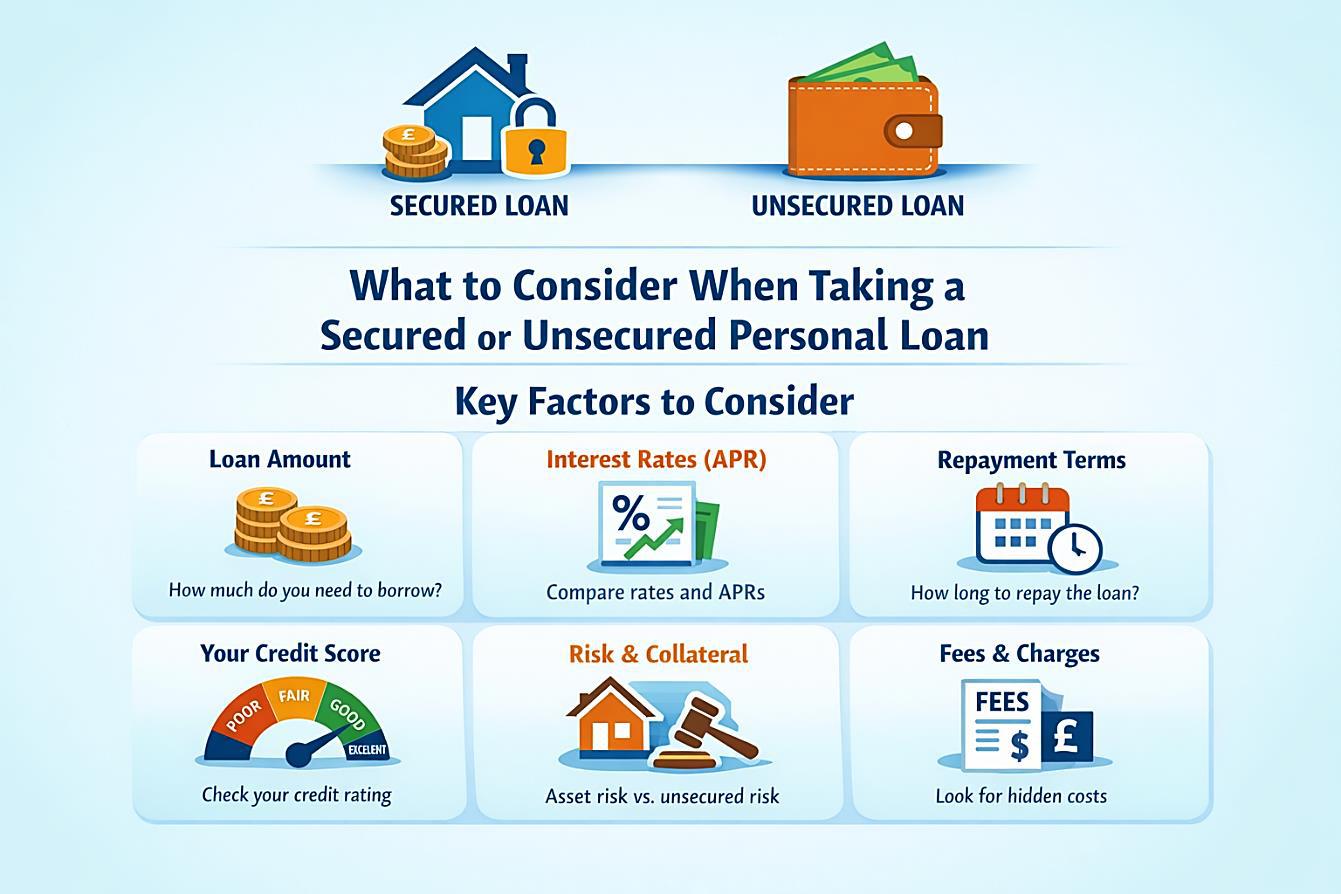
The interest rates on secured loans are lower than those on unsecured loans due to the collateral involved in the loan. The interest rates on secured personal loans begin from 5.05%-6.59% for prime borrowers.
These loans are also known as homeowner loans and are highly based on credit score, loan-to-value ratio and the term. Typical range for secured loans for bad credit borrowers is 9-15%, depending on the equity and affordability. It is according to the stats presented by MoneySavingAdvisors in the UK.
Alternatively, interest rates on unsecured personal loans are comparatively higher than secured loans. It is due to no collateral involvement and credibility-based criteria. Here, the loan provider takes more risk than in secured loans.
Hence, high interest rates compensate if the borrower fails to repay the dues. The current average interest rates on unsecured personal loans are 5.6%-9.9%. Interest rates for small loans up to £3000 is 9.9%. It is because these loans are easy to qualify for, do not require collateral and can be repaid in small instalments.
Note: Choosing a longer term, missing repayments, or picking a higher APR loan may make you pay more interest on both secured and unsecured loans. Therefore, analyse everything before borrowing.
How much can you borrow on secured and unsecured loans?
You can get £1000-£25000 on unsecured personal loans in the UK; some loan companies may offer up to £50000, for excellent credit scores (of 1250). Similarly, you can get £10000-£1,00,000 on secured personal loans, which may sometimes reach up to £5,00,000 for business purposes or loans involving equity.
Representative example of secured personal loans
For example, you need an urgent loan to renovate your new home. Here, you can consider a secured loan where the new home acts as collateral.
You decide to borrow £45000 at a loan repayment term of 10 years and an interest rates 5.39%. Here is how your costs may look:
| Loan amount | £45000 |
| Loan-to-value | 20.5% |
| Monthly repayment | £531 |
| Total repayable amount | £63,746 (includes loan fees and interest charges) |
| APR | 7.6% |
Loan-to-value ratio is the amount you need against the total value of your home in future. Most homeowners may get up to 80% LTV as a loan amount.
APR (ANNUAL PERCENTAGE RATE) is the total cost of a loan for a period of 1 year. It also includes interest charges.
Identify the possibilities of repaying the loan early. It may help you save money on interest charges.
What are the pros and cons of secured and unsecured loans?
Secured and unsecured personal loans have their share of advantages and disadvantages. Analysing that will help you choose the right option for your needs.
| Pros of secured loans | Cons of secured loans |
| Collateral-based loans have low interest rates that offer loan term affordability. | Puts your asset at risk. If you fall behind on payments, the loan company may repossess the asset. |
| Helps you borrow a high amount for bigger life purposes | Interest liabilities could be higher for a long-term loan |
| Splitting a loan into a long repayment term helps you keep monthly payments low. | The application process is slow and may require detailed documentation. |
| Improves loan approval chances for individuals with bad credit scores. | Applying early without the creditor’s consent may lead to a heavy penalty. |
If you cannot pay on a secured loan even after the grace period, contact experts. Check how you may deal with non-repayment on secured loans.
Now, let’s analyse the pros and cons of unsecured personal loans in the UK.
| Pros of unsecured personal loans | Cons of unsecured personal loans |
| You don’t need to risk your asset to get a loan. It means your property/assets are not at risk of repossession. | Interest rates are higher than those for secured loans. Individuals with a bad credit score may struggle to qualify for or get high-interest loans. |
| Simple application and low documentation fasten the loan analysis and approval process. | You cannot borrow beyond £25000 (in most cases) on an unsecured loan. |
| You can use the loan for any purpose. Debt consolidation, car repair, a wedding, or a holiday | Missing a payment or a series of rollovers may attract a CCJ that stays on the credit report for 6 years. It is even if you clear the dues. It affects future borrowing prospects and the terms you get. |
To summarise:
- Defaulting on a secured loan may lead to asset possession.
- Defaulting on an unsecured loan affects your credit score, but does not lead to asset possession
- Getting a secured loan for bad credit is cheaper and easier than unsecured personal loans.
- Applying for an unnecessarily longer-term means paying extra interest.
- Overpaying without the consent of the creditor may lead to penalties.
Contact us for a detailed understanding of the concept and get fair loans online.

Hi everyone, I am Lukas Thomas. I am a professional writer and author with having specialisation in the UK financial sector. I have more than 13 years of experience as the financial writer and hope it will continue longer. I have done my post-graduation in Masters of Business Administration (MBA) in Finance. Currently, I am performing my responsibility as a Senior Loan Expert in CashLoans2go, which is the fastest-growing online direct lending company. My job is to prepare borrower-friendly loan deals as per the company’s guidelines. I also write research-based blogs for the company’s official website. You can read them and gain knowledge on any loan product.