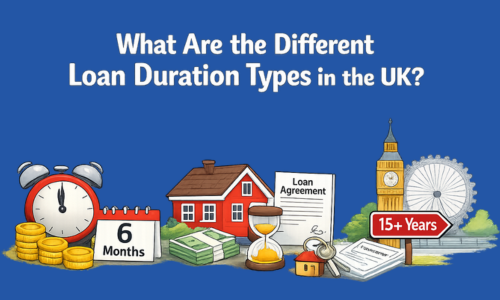
Loan terms affect the monthly and total cost of borrowing. Accordingly, these are of three major types, long-term, mid-term and short-term loans. All three are different in terms of features and purposes. You can understand better after knowing more about the significance of loan duration.
Knowing about loan terms helps make rational borrowing decisions
You should always know about the significance of loan duration while borrowing. Usually, applicants do not understand its importance and sometimes choose the wrong term. Make sure you are not repeating their mistakes.
What happens when you choose the wrong loan duration?
- Higher total interest rate
- Higher risk of default
- Increased monthly instalments
- Reduced financial flexibility
- Negative impact on credit score
- Early repayment charges
- Stress and financial anxiety
- Limited borrowing ability in future
What Does Loan Duration Mean?
A loan duration or loan term is the decided period to pay back a loan. This duration is mentioned in your loan agreement and is mutually agreed upon by the lender and you as a borrower.
Loan duration affects the borrowing cost on two aspects –
- Monthly repayment amount – Longer duration means smaller monthly instalments. Shorter duration means bigger monthly repayments.
- Total interest paid – Longer duration loans make you pay more interest in total. While medium and short-term borrowing has a lower total interest rate. You may pay big instalments every month, but the loan ends faster, hence the total cost is always less.
What Are the Main Types of Loan Duration in the UK?
As you read above, the three major loan duration types are short-term, medium-term, and long-term. Understand better with the explanation below. But the basic features like loan amount and interest rate can differ as per the lenders.
- Short-term loans – The loans are for a small tenure that spans from a few weeks to 12 months. Loan amount is from £100 to £5000. These are often used for unexpected or urgent needs for funds. Sudden car repair, urgent medical bills, rental gaps, etc. Same-day loans and emergency loans are the relevant examples.
| Pros and Cons of short-duration loans | |
| Pros | Cons |
| Speedy access to funds for all purposes | High rate of interest |
| Suitable for urgent requirements | Limited borrowing amount |
| Short tenure financial commitment | Risk of debt cycle |
- Medium-term loans – The loans have a duration of 1 to 5 years. The loan amount is typically from £1000 to £15000. Lower rate of interest and suitable for purposes like debt consolidation, purchase of appliances and mid to large-scale home improvement.
| Pros and Cons of Mid-term loans | |
| Manageable monthly instalments | Longer commitment than short-term loans. |
| Lower interest as compare to short-term loans | Interest may accumulate over time. |
| Used as debt management tool for consolidation | Can affect future loan approval chances. |
- Long-term loans – These have a tenure of 5 years to 25 years. The loan amount spans from £10,000 to any maximum amount as per the loan type. For example, in the case of a mortgage, the maximum amount is a few lakhs. These are secured personal loans or large amount home improvement loans.
| Pros and cons of long-term loans | |
| Pros | Cons |
| Lower monthly interest rate compared to short and mid-term loans. | Higher total interest rate due to long tenure. |
| Simpler repayment budgeting due to smaller monthly instalments. | Long-term financial commitments. Hence, future loan approval chances may be affected. |
| Suitable for big financial purposes, such as a home purchase | You end up paying a bigger loan amount due to more interest over the long term. |
Short-Term vs Long-Term Loans – What’s the Difference?
As you have read above about all the loan term types, here is a straightforward difference between short-term and long-term loans.
| Short-term loans | Long-term loans |
| Duration up to 12 months | Up to 5+year tenure |
| Do not need collateral to secured funds | Collateral may be required, such as property or vehicle |
| Smaller loan amount for temporary needs | Bigger loan amount for bigger needs of funds |
| Fast approval speed and fund disbursement | Slower approval speed and disbursement may take time. |
Does a Longer Loan Term Mean Paying More Interest?
Yes, it does mean the same. This is because when the tenure is long, you are paying instalments for a long time. Hence, the interest rate will be paid with every repayment for years.
Example –
- Loan amount is £900000.
- Tenure – 15 years.
- Interest rate – 5.5% (p.a. fixed)
- Estimated monthly rate – 0.458%
- Monthly instalment – £7350.
- Total repayment in 15 years – Total amount paid £1,323,000 and total interest paid – £423,000
How Do You Choose the Right Loan Duration?
Follow the tips below to pick the right loan duration.
- Know your monthly budget – Always know your repayment ability. Use a loan calculator and know how much you can afford to pay. This helps decide a suitable tenure.
- Loan purpose – Just by knowing your purpose, you can know the suitable tenure. For emergency needs, a short-duration loan is sufficient. For wedding arrangements, you need a mid-term borrowing option. If you need a large-scale home improvement or remodelling, pick a longer tenure.
- Total cost of borrowing – Check the total repayment amount, and not only the monthly costs. This gives a clear idea of the term of your loan. For example, long-term loans include many years hence; you end up paying more as more months are included.
Can You Change Your Loan Duration After Approval?
This may be possible in some cases, depending on the circumstances and loan type. If refinancing is available, you may choose a new loan term with revised interest rates. Early repayment options also allow you to shorten the tenure.
If the lender has an affordable or no early repayment fee policy, pay off early. This way you can end paying the loan for the decided tenure. But if you ever want flexibility in the loan term, confirm it before asking the lender.
Usually, flexibility regarding the duration is possible in case of a direct lender. Mainstream banks or lenders have little or no flexibility to change the term. Direct lending companies are more adaptable to that option due to their flexible repayment options.
Conclusion
The duration of your loan plays a critical role in borrowing cost and also your borrowing experience in the UK. Whatever term you choose, it has its own features. Hence, more than the duration, you need to focus on the purpose of borrowing. This naturally helps choose the right loan term.
- For a quick purpose, choose a short tenure but expect expensive deals.
- From a mid-term loan, you can expect a balance of cost as well as duration.
- Long-term borrowing is perfect for lower monthly expenses. But be ready to pay more at the end.
Do your research, choose your purpose, and you can easily spot the right loan type and the term.

Hi everyone, I am Lukas Thomas. I am a professional writer and author with having specialisation in the UK financial sector. I have more than 13 years of experience as the financial writer and hope it will continue longer. I have done my post-graduation in Masters of Business Administration (MBA) in Finance. Currently, I am performing my responsibility as a Senior Loan Expert in CashLoans2go, which is the fastest-growing online direct lending company. My job is to prepare borrower-friendly loan deals as per the company’s guidelines. I also write research-based blogs for the company’s official website. You can read them and gain knowledge on any loan product.