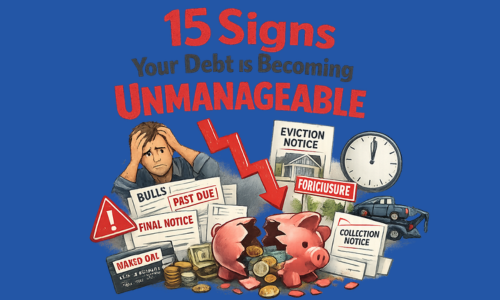
Unmanageable debt is a sign of a poor financial condition. When you have multiple debts and are struggling to keep up with them, they begin to spiral up, adding pressure to your budget. If the control is not regained soon, it becomes a threat to your financial stability. There are various warning signs that should raise red flags. Address them before it is too late.
15 signs that your debt is getting out of control
Here are the telltale signs of problem debt:
1. You cannot pay more than minimum payments
Minimum payments on your credit and loans are a red flag. Interest will keep accruing on the unpaid balance, accumulating the debt. At one point, you will be forced to give up due to disproportionate debt.
2. You “rob Peter to pay Paul”
If you have been borrowing money to discharge other outstanding debts, it is a clear sign that you have already been sunk into a dangerous cycle of ongoing borrowing. The practice will throw you into a deeper hole of debt.
3. Your debt-to-income ratio is rising
An ideal ratio is recommended to be maintained at 35%, but if you notice that this ratio is constantly on the rise, you should immediately understand that your expenses and income do not align with each other, and a large proportion of your income might have been going towards debt settlement.
4. You do not have an emergency cushion
Having savings is a must to preclude you from borrowing money. They help you meet unforeseen expenses, but if you keep using loans to cover them due to little or no savings, there is a problem with your spending behaviour.
5. You are avoiding bills
Are credit card bills piling up? Do you avoid paying utility bills? Is your lender sending reminders about payments? All these signs are not good for your financial health. If you feel overwhelmed by the thought of checking your statement, it is a clear indication that you are suffering from problem debt.
6. You are constantly running up overdrafts
Overly dependence on overdrafts will shrink your cash flow. Having an overdraft once in a while is not a bad idea as long as you pay it off soon. Overdrafts accrue interest by the day. If you do not settle them soon, you will most likely fall into an abyss of debt.
7. You are relying on short-term high-cost debts
Small emergency loans such as payday loans seem to be convenient, but they come with exorbitant interest rates. In case of insufficient savings, they might come in handy to fund the gap, but taking out too many payday loans every now and then is a serious threat to your financial health.
8. Your credit score is falling
Late payments and defaults wreak havoc on your credit score. They continue to affect your credit score for two years and six years, respectively. Other than that, too many credit applications also pull your credit points. If you have multiple outstanding debts, try combining them by taking out a debt consolidation loan from a direct lender.
9. You are being chased by collection agencies
Your account goes into default after missing payments for a period of three months. Your lender will send your account to collection agencies, which will start contacting you via emails, text messages and phone calls. If your heart sinks when checking your mailbox or you fear attending a phone call from the collection agency, you should accept the fact that you have plunged into debt.
10. You are forced to cut back on essentials
In order to tackle your debt, you may have to cut down on discretionary expenses, but if you are to slash your essential budget too, this is the time for you to get started worried about your debt.
11. You are spending sleepless nights
If you have racked up debt, you lose mental peace. You might be spending nights awake thinking all the time about your money and debt payments. Collection agencies, CCJs and court summonses could be haunting you in dreams. When debt becomes a nightmare, you should start tackling it without further ado.
12. You often max out your credit cards
Maxing out credit cards is a sign of problem debt. It means you are left with no savings and income to pay for unexpected and essential expenses. A high credit utilisation ratio deteriorates your credit score.
13. You are embarrassed about your financial life
If you do not want to talk about money with your family or you hesitate to come clean about your money mistakes, it might be a sign of intolerable debt. It is quite obvious to be ashamed of your financial situation.
14. You are postponing big goals
If you have a lot of debt, it might hold you back from achieving goals such as buying a house and car and starting a family. It is high time you addressed your financial problems if you have been putting off these plans due to financial constraints.
15. You are living paycheque to paycheque
Living paycheque to paycheque means that the entire money that comes in goes out. You will be stuck in this ongoing cycle unless you start putting aside some money for unexpected expenses.
The final word
Unmanageable debt has far-reaching impact on your finances. A golden rule of thumb says that you should immediately address the concerns before it is too late. Here are some suggestions to tackle insurmountable debt:
- Prioritise debts. Try paying high-cost debts first. If you can pay only the minimum payment, that is fine, but adhere to payments.
- Increase your income sources. Find a side gig and allocate that money to debt payments.
- Create a budget to track your expenses. Stick to only essential spending unless debt is settled.
- Negotiate with creditors. They might be willing to accept lower payments. You will need a debt management plan.
- Avoid taking out a new debt and concentrate on building an emergency cushion.
- Consider consolidation of existing debts.
- Seek professional help if needed.
- Declare bankruptcy; however, it should be a last resort.
FAQs
How many debts are too many?
Too many debts are not determined by the number of debts you owe but rather by your affordability. A debt-to-income ratio should not exceed 30%.
Can debt affect my credit score?
Yes, they affect your credit score. On-time payments will ameliorate your credit score, and missed payments will pull your credit points.
Should I consider a debt consolidation loan?
It depends on your financial situation. If you think consolidating existing debts into one large personal loan helps reduce debt, a debt consolidation loan could be the right choice.
What happens if I keep ignoring debt problems?
By ignoring debts, you will end up with a badly damaged credit rating, collection agencies, and a CCJ.
What are my options if I cannot pay off debts at all?
Talk to a debt expert. You generally have two options: A Debt Relief Order or bankruptcy.

Hi everyone, I am Lukas Thomas. I am a professional writer and author with having specialisation in the UK financial sector. I have more than 13 years of experience as the financial writer and hope it will continue longer. I have done my post-graduation in Masters of Business Administration (MBA) in Finance. Currently, I am performing my responsibility as a Senior Loan Expert in CashLoans2go, which is the fastest-growing online direct lending company. My job is to prepare borrower-friendly loan deals as per the company’s guidelines. I also write research-based blogs for the company’s official website. You can read them and gain knowledge on any loan product.