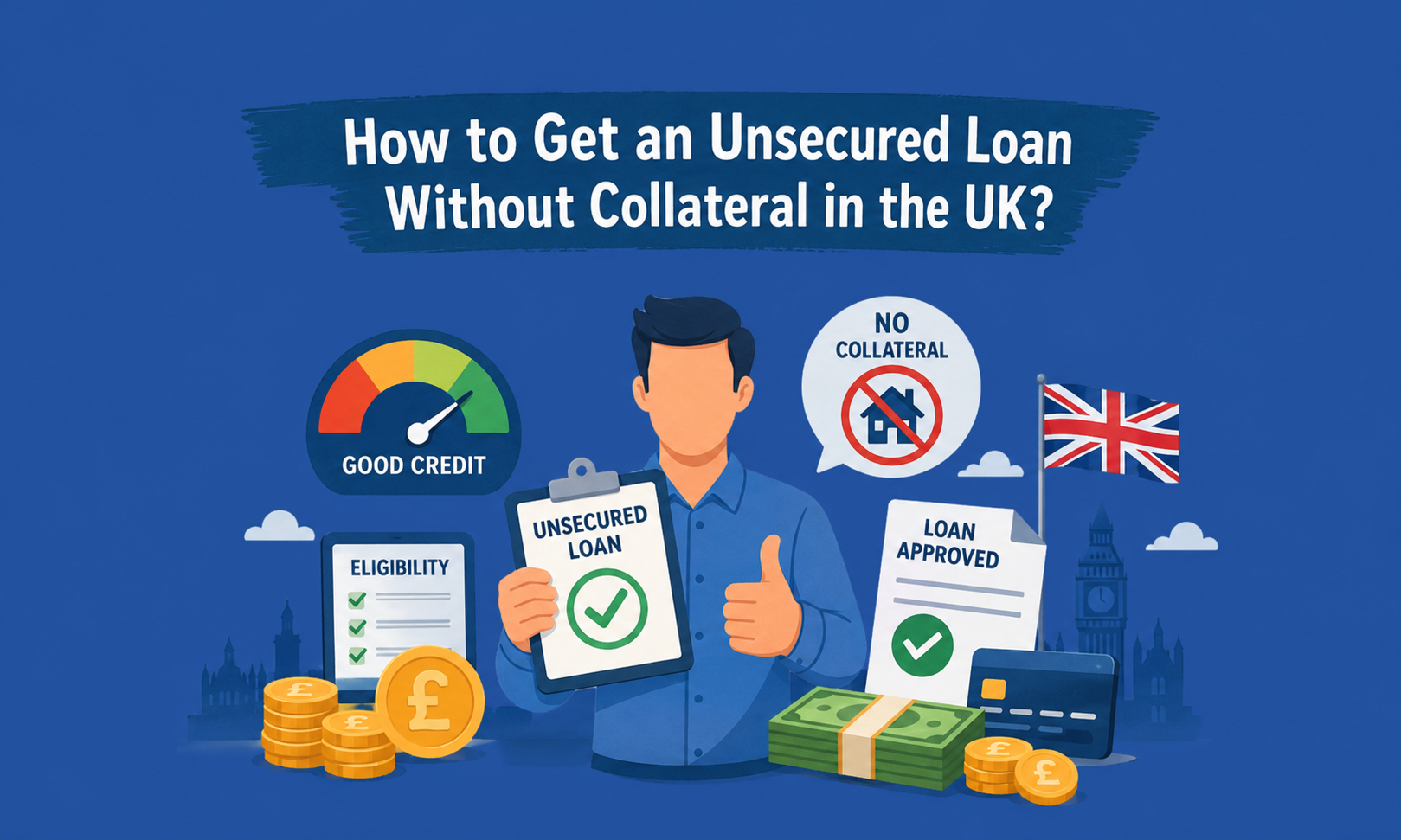
You may have multiple goals to achieve in your life. It could be renovating the property, repairing a car, improving education prospects or starting a business. However, you may delay the aspect due to limited savings. Some individuals fear taking loans by securing their precious assets.
What if you can get a good lump sum without risking your possessions? Yes, you can do that with an unsecured loan. It helps you get the amount you need without pledging the assets. Instead, you may qualify for the loan if you can afford the payments without impacting your basic budget. The blog discusses how to get unsecured loans without collateral.
What do you mean by an Unsecured loan?
Unsecured loans are financial facilities that allow one to borrow an amount without putting up collateral. An unsecured loan is typically offered for a small amount, £1000-£25000. While you can use the loan for any purpose, debt consolidation, car repairs, home renovations, and bill payments are common uses for these loans.
Unlike secured loans, approval for unsecured loans is based on credit score, income, employment stability, residential profile, and monthly expenses. Individual loan companies share a high risk of default on these loans. Therefore, interest rates are more competitive than secured loans. Individual borrowers with a good income, credit score and low debt-to-income ratio may fetch better interest rates.
Who may get the best rates on unsecured loans?
You may generally spot high interest rates on unsecured loans. It is due to the high risk that the loan company shares without an asset requirement. Still, you may get the best unsecured loans without collateral in the UK if you meet the following criteria:
- People with excellent credit histories
Individuals with 861+(Experian) credit scores may get low interest rates. It is because a high credit score demonstrates one’s ability to repay the dues on time. A disciplined payment history reassures the loan company. It minimises the risk for the loan provider.
- Seeking amounts over £7000
Borrowing £7000-£25000 amounts may prove less expensive. The more you borrow, the more you may get a loan with low interest rates. It is because loan companies offer their “headline” for medium to large amounts rather than small ones.
- Long-term UK resident with a steady job
Individuals living in the country for over 3 years with a stable job may get better interest rates. Your income should be at least £10-£12k/year to get the loan.
How to get an unsecured loan on the first attempt in the UK?
If you want an unsecured loan and want to qualify for it on the first attempt, the following tips may help:
- Step 1- Identify the purpose and the amount needed
The first step is to analyse the amount you need according to the purpose. Check how much you can afford from your current savings. You can bridge the amount later. You may get according to what you can repay comfortably. Check MoneySuperMarket for a loan calculator to understand how much you may qualify for. You will get an approximate number.
- Step 2- Check your credit score and debts
Request an updated credit report from Experian. You may get one for free. It may help you understand the pending debts, missed payments, overdrafts, delinquencies, and report errors to the credit agency.
It may help you boost your credit score. Analyse the debts that you can clear now to improve the credit situation. You can begin with small payments like payday loans, short-term loans, rent or utility bills.
- Step 3- Pre-qualify to understand eligibility
You must understand the eligibility criteria before seeking unsecured loans. It may vary slightly across the loan providers. However, you must meet the basic criteria to get a loan. Here is what you may expect:
- Clear credit profile: You must not have any recent CCJ, bankruptcy status or IVA. Credit scores above 670 are generally ideal to get a loan easily.
- Pass the affordability check: You must have a debt-to-income ratio under 50%. Prove that through 3 months of bank statements and payslips.
- Stable employment history: You should have 3+ years of consistent employment history with a relevant and verified income source. It is valid for self-employed individuals as well.
- Residential address: You must have been living for at least 2+ years in the same residence.
- Income: £10000 and above /yearly. One may get a loan as a retiree, pensioner, self-employed, or full-time worker.
The pre-qualification process may help you if you are seeking bad credit loans from direct lenders online. It prevents you from applying for loans that you may not be able to repay on time.
- Step 4- Check the cheapest APR and apply
Identify the best APR and interest rate that you can get, given your financial profile and requirements. Basic APR on unsecured loans in the UK ranges from 6%-30%.
It means you may get the best interest rates of 5.6%-6.5% for loans of £7000-£25000. However, you may expect 9.9% for loans amounting to £3000. Compare the options by checking the APR, interest and total loan cost. Fetch the one offering the cheapest personal loan.
- Step 5- Get a quick decision and provide documents
Once you apply, you may get a soft credit quote listing the approximate amount you may get. It does not affect your credit score. You may proceed if you find the quote affordable. Enquire about the documents required and provide accurate copies of the same. The loan company may analyse the affordability of a loan and provide a final agreement accordingly.
- Step 6- Accept and repay the dues timely
Accept the loan agreement after analysing the costs in detail. Check it for the hidden costs (if any). If you find the terms affordable, provide your consent via email. Repay the dues according to the agreement schedule.
FAQs
- What is the maximum amount you can get on unsecured loans in the UK?
The maximum amount that you can get on an unsecured loan is £50,000. However, most loan companies offer up to £25000. You need to have an excellent credit score, good financial management and income to get up to £50,000 for your needs.
- Is it hard to get an unsecured loan?
Yes, getting an unsecured loan is harder than secured loans. It is because the affordability and eligibility criteria are strict here. It is due to no collateral involvement. You must meet the specific income, credit score, debt-to-income ratio and other criteria to qualify for the loan. Moreover, the requirements may differ across loan providers.
- What can you not use an unsecured personal loan for?
You cannot use an unsecured personal loan for illegal, high-risk, or other speculative purposes. It means you may not get one for gambling, buying unauthorised properties, or participating in investment schemes.
- What impacts your credit score the most?
Your payment history is the real killer of your credit score. Late payments, missed payments, and no payments affect the credit score. It provokes additional interest costs and leads to penalties. Eventually, it casts a negative impression on the creditor and other loan providers. Eventually, your credit score drops.
- What if I cannot pay off the loan?
You can contact us immediately if you believe that you cannot pay the loan anymore. We may help you get a new reschedule that aligns well with your current affordability. It prevents you from missing payments and attracting penalties and high loan costs.
Bottom line
Thus, you can get an unsecured loan without collateral if you can repay the dues on time. Individuals with a good credit score, a low debt-to-income ratio and consistent income may get better interest rates. Check how much you can qualify for using a soft credit assessment or a loan calculator. It helps you get an approximation without hurting your credit score.

Hi everyone, I am Lukas Thomas. I am a professional writer and author with having specialisation in the UK financial sector. I have more than 13 years of experience as the financial writer and hope it will continue longer. I have done my post-graduation in Masters of Business Administration (MBA) in Finance. Currently, I am performing my responsibility as a Senior Loan Expert in CashLoans2go, which is the fastest-growing online direct lending company. My job is to prepare borrower-friendly loan deals as per the company’s guidelines. I also write research-based blogs for the company’s official website. You can read them and gain knowledge on any loan product.