
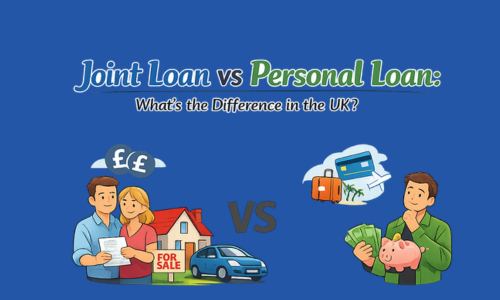
When you are planning to borrow money, various things run through your mind. First, it is the type of loan you should choose. Second, whether you need someone else as a co-borrower or not.
Based on the requirements of borrowers, diverse options have been made available. Therefore, getting a joint personal loan in the UK is possible. Now, it is your call to understand which one should be considered.
They both will serve different purposes, and you must know how they differ.
What is a personal loan in the UK?
Personal loans are an unsecured borrowing arrangement meant to be obtained individually. In this case, only one applicant will be there whose income, expenses, debts and affordability will be evaluated by the loan provider.
The key characteristics of these loans are:
- Monthly payments will be fixed, and you can plan accordingly
- Rate of interest will remain the same throughout the term of the loan
- No collateral should be pledged to get access to funds
- Strong affordability is required to provide repayment assurance
Tackling unexpected cash crunches, emergency expenses, home or car repairs, sudden treatment payouts, consolidating debts, etc., can be achieved with the help of these loans. Disclosing the purpose is not necessary, but the lender will clarify if the requirement is relevant or not.
What Is a Joint Loan and How Does It Work?
When a borrowing arrangement requires the involvement of two loan applicants, it is a joint loan. Spouses, partners, or close family members can become co-applicants. Both incomes and affordability will be validated before the approval decision is made.
Here is the clear breakdown of the working procedure of these loans.
- Application
Personal information, income details, etc., need to be entered in the online form. Here, the application will hold information about both borrowers. One’s pros can balance the cons of another’s profile.
- Financial checks
Here, the financial profiles of both applicants will be assessed. Household income, expenses, the status of current debts and credit histories of both applicants will be reviewed. This enables the lender to figure out the ideal amount you should borrow.
- Approval
If your application seems convincing, the lender will approve funds. You will receive the approved sum of money in your bank account. Here, you should have a joint account so that you do not have to face loan-related disputes later.
- Repayment
Both applicants will be liable to repay loans. If one of them fails to pay back, the other person will have full responsibility to cover the loan repayments. In case of missed payments, the loan provider will take action against both borrowers.
What Is the Main Difference Between Joint and Personal Loans?
These two loans differ mainly based on eligibility and responsibility. Here is a table created to help you spot the unique differences.
| Joint loans | Personal loans |
| Exit strategy is not very much flexible, and the lender might have to intervene to remove one party | Exit strategy can be flexible since you have to take care of loan payments |
| Missed payments by one borrower can affect future borrowing prospects | No need to worry about the external impact on your borrowing potential |
| Qualifying is harder as both should convince the lender together | Your affordability can help you to win the confidence of the lender |
| The second borrower can act as an alternative when the first one misses repayments | No such arrangement is possible, as you are only responsible for loan payments |
| Both will participate in deciding the funds usage | You can spend money based on your necessities |
Can You Borrow More with a Joint Loan in the UK?
Yes, joint loans let you combine two incomes, which works in favour of enhancing your affordability. The lender sees less risk, as repayment will be taken over by the second applicant if the first applicant fails to repay on time.
What Are the Risks of a Joint Loan Compared to a Personal Loan?
While comparing, the risks of getting these loans should be reviewed as well.
- Deal with shared liability for loan repayments
- Missed payments will affect both credit profiles
- Financial dealings can complicate personal relationships
- Removing one borrower is not going to be easy
- If income weakens for one borrower, the other should manage full repayment
When Should You Choose a Joint Loan Instead of a Personal Loan?
Getting a joint loan makes sense when:
- You have a requirement for a larger number of loans
- Your credit profile is blemished, but the other applicant has a strong history
- You are handling shared expenses in the household
- You are financially stable and can afford loans
When Is a Personal Loan the Better Option?
Getting personal loans will make sense when you:
- Can take charge of loan repayments independently
- Prefer financial independence over anything
- Have strong affordability to convince the lender
- Want loans for some individual purpose and not for common interests
- Want to borrow money without taking any risk
How Do You Apply for a Joint or Personal Loan in the UK?
The process to apply for these two loans will more or less remain the same. This is because of the lending source, which is a direct lender. The steps are:
- See your eligibility and fill out the online form
- Wait for the lender to process your loan request
- Go through pre-application checks (mandatory for the lender)
- Lender will approve if you have convincing affordability
- Get pre-approved offers and compare with those of other lenders
- Review and decide which one is the perfect option
- Sign the agreement to finally get access to the loan amount
Can You Switch from a Joint Loan to a Personal Loan Later?
Switching might not be possible the way you want. This is not going to be a straightforward process. One borrower can consider getting a personal loan to repay joint loans, but that would be risky.
This will be refinancing and should be considered after assessing the pros and cons. Moreover, you can step forward and repay the loan in full to come out of the loan agreement.
Are Joint Loans Available from All UK Lenders?
Not all loan providers might be offering these loans. The lending process is more complicated, and this prevents mainstream lenders from providing this type of loan. You can look for specialised lenders who can offer these loans.
It would be better for you to check with the lender directly. This will lower confusion, and you can decide in real-time.
Conclusion
Choosing between these two options might be tricky. Find out if getting joint loans is safer than personal loans and vice versa. Draw a comparison of the features.
FAQs
Can friends take a joint loan in the UK?
This will depend on the lender who has been chosen. They can tell if you can include your friends in a joint loan partnership. Moreover, both applicants must fulfil the eligibility criteria.
Who owns the money in a joint loan?
Loan funds will be equally accessible to both applicants. The loan usage will depend on mutual understanding. No matter who uses the loan, both are liable to repay the entire amount.
Can one person leave a joint loan?
Leaving the joint loan agreement is not going to be easy. It is not allowed in most cases. Refinance and pay back the full amount to leave.

Hi everyone, I am Lukas Thomas. I am a professional writer and author with having specialisation in the UK financial sector. I have more than 13 years of experience as the financial writer and hope it will continue longer. I have done my post-graduation in Masters of Business Administration (MBA) in Finance. Currently, I am performing my responsibility as a Senior Loan Expert in CashLoans2go, which is the fastest-growing online direct lending company. My job is to prepare borrower-friendly loan deals as per the company’s guidelines. I also write research-based blogs for the company’s official website. You can read them and gain knowledge on any loan product.